
How to Deepen Your Yoga Practice Beyond the Physical Postures
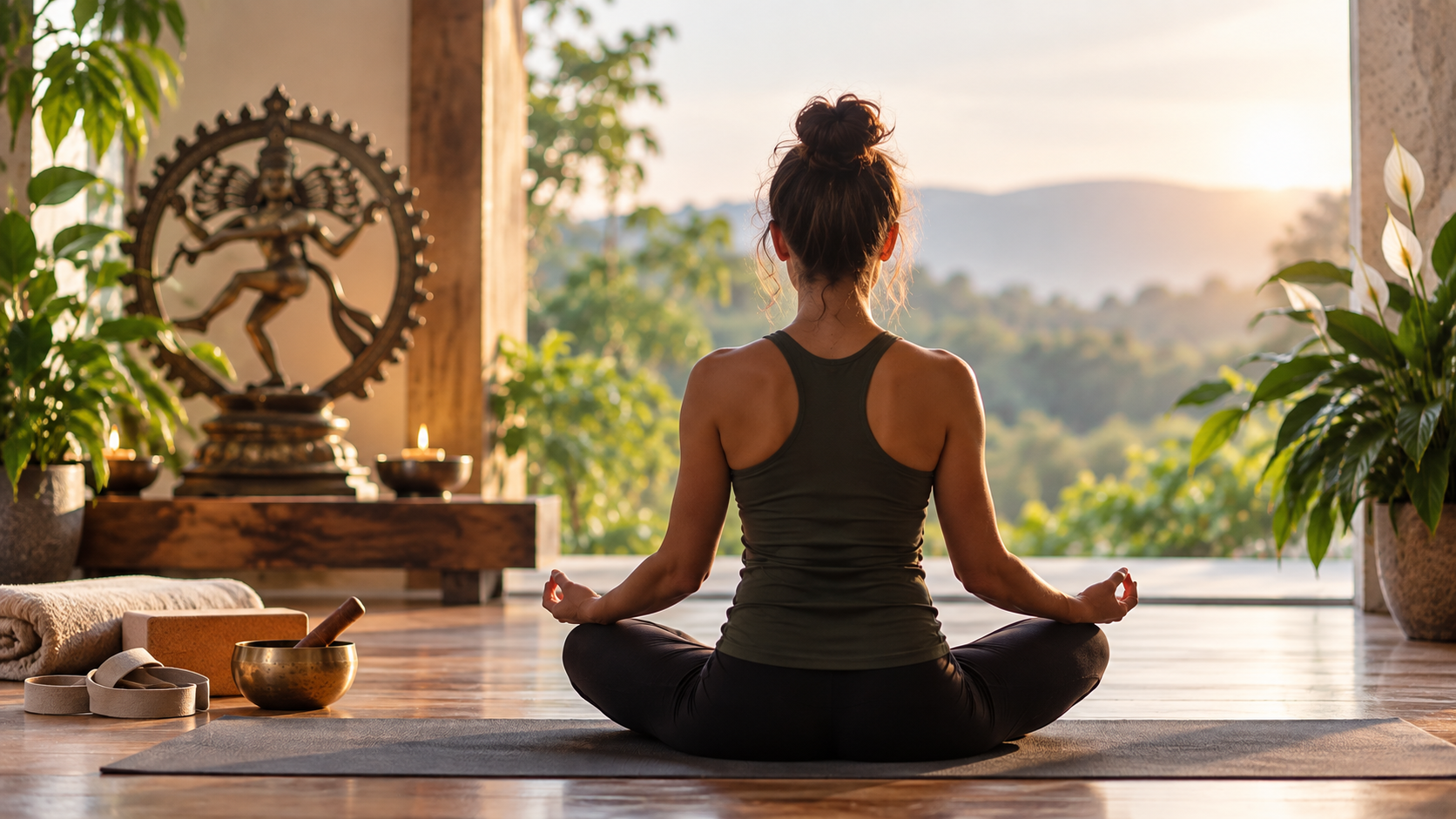
For many people, yoga begins with the physical practice.
You learn the postures, become more familiar with your body, gradually improve your balance and mobility, and perhaps start noticing that you feel calmer after a class.
But after practising for a while, an interesting question often appears:
What comes next?
You may be comfortable with many of the asanas, but feel that there is something more to yoga than simply learning increasingly difficult postures.
And there is.
Yoga can become a lifelong practice precisely because it offers many different layers to explore. Developing your practice does not necessarily mean becoming more flexible or mastering advanced poses. Sometimes, progress means slowing down, becoming more aware and understanding what is happening within the body and mind.
Stop Measuring Progress Only Through Flexibility
It is very easy to measure yoga through visible achievements.
Can you touch your toes?
Can you hold a balancing posture longer?
Can you perform a deeper backbend?
These can certainly demonstrate changes in the body, but they are only one aspect of practice.
Someone may be extremely flexible while having difficulty controlling their breathing or remaining mentally present. Another practitioner may have limited flexibility but demonstrate excellent body awareness, concentration and control.
As your practice develops, try asking different questions.
Is my breathing calmer?
Am I more aware of tension in my body?
Can I remain focused during a posture?
Do I understand when to challenge myself and when to stop?
These are also signs of progress.
Bring More Attention to Your Breath
One of the most important ways to deepen yoga is to pay greater attention to breathing.
In the early stages of practice, much of our attention is occupied by the physical instructions: where to place the feet, how to position the arms or whether we are performing the posture correctly.
With experience, there is more opportunity to observe the breath.
Notice whether your breathing remains smooth during a posture. Observe what happens when a position becomes challenging. Do you hold your breath? Does it become shallow or hurried?
Developing this awareness can completely change the quality of your practice.
You may also begin exploring pranayama — traditional yogic breathing practices — under appropriate guidance.
The breath creates an important connection between physical practice and the quieter, more meditative aspects of yoga.
Practise With Greater Awareness
It is possible to perform an entire yoga class almost automatically.
Your body knows the movements, you recognise the sequence and you simply move from one posture to another.
But familiarity can sometimes reduce awareness.
Instead, try approaching familiar postures as though you were learning them again.
Notice how your feet connect with the floor.
Observe the distribution of weight through your body.
Pay attention to your spine.
Notice where you are holding unnecessary tension.
Observe your breathing.
Small details can transform a posture you have practised hundreds of times.
This is one reason practising with an experienced teacher can remain valuable even after years of yoga. Good teaching does not simply introduce new postures. It helps you discover something new within familiar ones.
Explore Meditation
Physical yoga practice naturally creates opportunities to explore meditation.
After moving the body and settling the breath, sitting quietly can often feel easier.
Meditation does not need to begin with long sessions.
Start with five minutes.
Sit comfortably, observe your breathing and notice what happens in the mind without trying to force your thoughts away.
Some days will feel peaceful. Other days your mind may be extremely active.
Both experiences are part of the practice.
Over time, meditation can become as important to your yoga journey as the physical postures themselves.
Learn More About Yoga Philosophy
Another way to deepen your practice is to become curious about where yoga comes from.
Yoga has a rich philosophical tradition that goes far beyond physical exercise.
Exploring subjects such as the eight limbs of yoga, meditation, pranayama, awareness and traditional yogic philosophy can provide a completely different perspective on what you experience in class.
You do not need to become an academic.
Simply understanding some of the ideas behind the practice can make your time on the mat more meaningful.
Develop a Consistent Practice
Depth usually comes from consistency rather than intensity.
One very demanding yoga session followed by three weeks without practice is unlikely to have the same impact as practising regularly.
Your practice does not always need to last an hour.
Even twenty minutes of mindful movement, breathing or meditation can maintain your connection with yoga.
The important thing is to create a rhythm that fits realistically into your life.
Learn From Experience
Yoga is unusual because progress often makes us realise how much more there is to learn.
The longer you practise, the more subtle the practice can become.
At Shiva Yoga in Liverpool, Mohan brings more than five decades of yoga practice and teaching experience to his classes. His approach encourages students to develop awareness of the body, breath and movement while exploring yoga as something broader than physical exercise.
Whether you have been practising for a few months or many years, there is always another layer to discover.
Your Practice Doesn't Need to Look Impressive
Perhaps the most important thing to remember is that deepening your yoga practice does not mean making it look more impressive.
You don't need to perform the most difficult posture in the room.
Instead, practise with curiosity.
Pay attention to your breathing.
Observe your body.
Explore meditation.
Learn about the philosophy behind yoga.
And give yourself time.
Yoga is not something that needs to be completed or mastered.
For many practitioners, that is exactly what makes the journey so rewarding.