
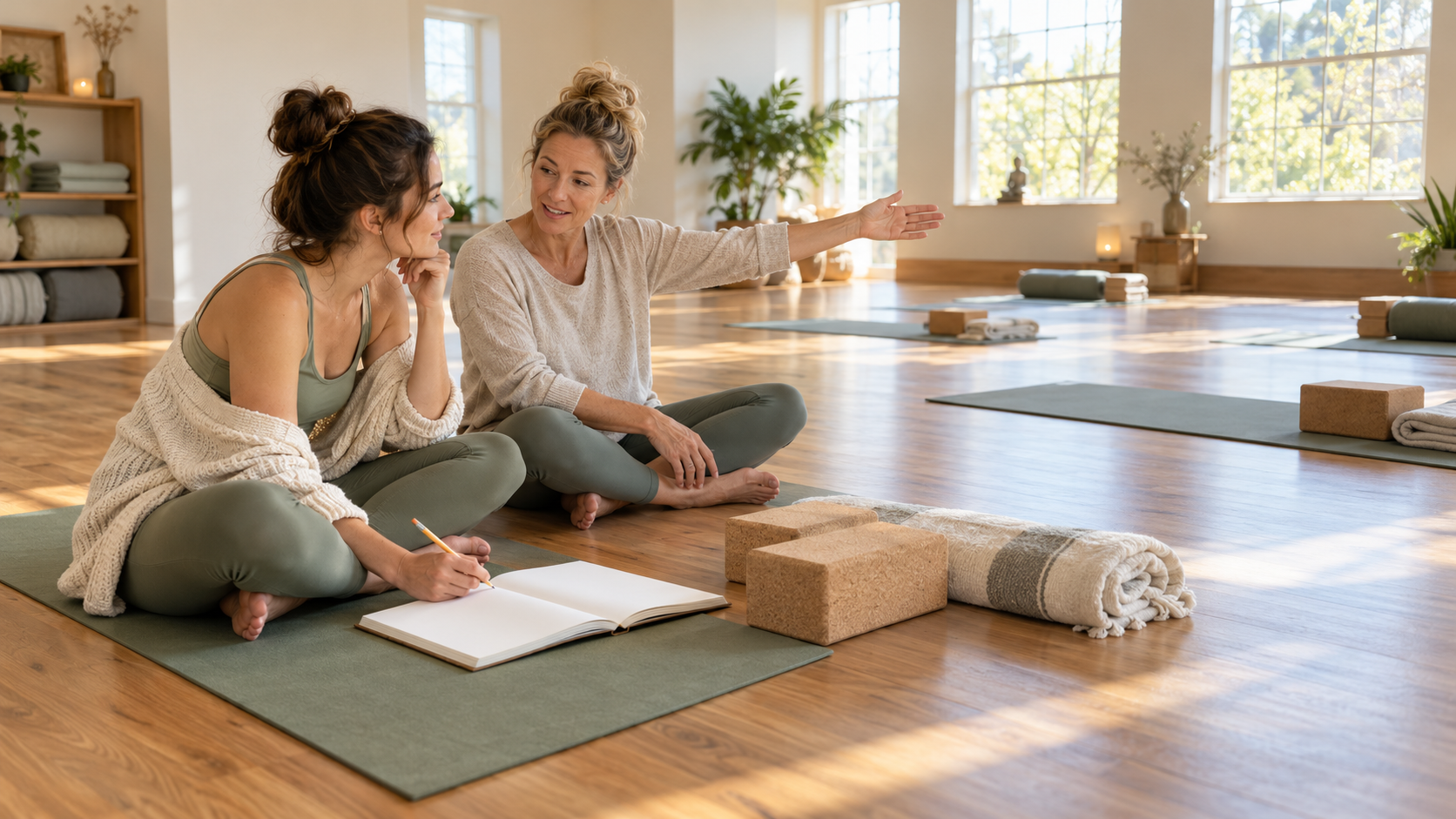
Learn how to approach your first yoga class plan, from choosing a clear purpose to creating a manageable sequence and allowing time for rest.
A blank class plan can feel surprisingly daunting.
You may have attended many yoga classes and developed a practice you enjoy. Yet deciding what to teach, in what order and for how long introduces a different set of questions.
How many postures should you include? What makes a sequence feel coherent? What happens if you finish earlier than expected?
For aspiring yoga teachers, class planning is a skill to develop gradually. A useful starting point is a clear purpose, a manageable structure and enough flexibility to respond to the people attending.
Start with the Students
Before selecting postures, think about who the class is for.
A group of beginners may need more explanation and time to become familiar with each movement. Students with more experience may understand certain instructions quickly, although they will still have different needs and preferences.
Consider the setting too. A lunchtime workplace session has different practical constraints from a longer studio class.
Useful planning questions include:
Who is expected to attend?
How familiar are they with yoga?
How much time is available?
What equipment and space will they have?
Is the proposed content appropriate to my training?
You may not know everything about the group in advance. Identifying what you do know gives your plan a sensible foundation.
Choose One Clear Purpose
Your first class does not need to demonstrate everything you have learned.
Choose a straightforward purpose, such as introducing basic standing postures, exploring comfortable movement or helping beginners become familiar with a simple sequence.
Use that purpose to make decisions. If a posture adds complexity without contributing to the class, consider leaving it out.
A focused plan is easier to teach and gives students time to become familiar with what you are sharing.
Build a Recognisable Structure
A practical planning framework might include:
Arrival: Give students time to settle, understand the session and bring attention to how they feel.
Preparation: Introduce movements that prepare them for the activities you intend to teach.
Main practice: Develop the central content of the class at an appropriate pace.
A gradual close: Allow time to move towards rest and finish without rushing.
The exact structure will depend on the style of yoga, the students and your training. Use this framework as a starting point for discussion with your tutor.
Think About the Journey Between Postures
A class plan is more than a list of poses.
Imagine how students will move from one position to the next. Are they repeatedly getting up from the floor? Does a transition require an explanation? Will they need time to collect or reposition a prop?
Practise the sequence yourself while speaking the instructions aloud. You may discover that a transition takes longer than expected or that a simpler order feels more manageable.
These details can make a significant difference to how clearly you guide the class.
Plan Fewer Things and Teach Them Well
New teachers can underestimate how much time instruction takes.
A movement that lasts a few seconds in your own practice may require a demonstration, an explanation, an option and a pause when you teach it.
Avoid filling every minute with new material. Leave space for students to respond and for you to clarify an instruction.
Mark one section as optional, so you have something you can leave out if the class needs more time elsewhere. Protect the closing section when making those decisions.
Prepare Options Before You Need Them
During planning, consider where students might benefit from another approach.
Could a prop make a position more accessible? Is there a simpler movement you have been trained to offer? How will you explain the option?
Preparing these choices in advance can reduce the pressure to improvise.
Keep your teaching within your competence, and discuss unfamiliar situations with your tutor. You are developing the judgement to recognise both what you can offer and when you need guidance.
Review the Plan After Teaching
Your class plan becomes more useful when you reflect on what happened.
After a practice teaching session, write down a few observations:
Which instructions were easy to follow?
Where did students need more time?
Did the transitions work?
Was the amount of content manageable?
What would I change next time?
Be specific. “Allow another minute to explain the starting position” gives you a clearer next step than “be more confident.”
Build Your Foundations with Shiva Yoga UK
Shiva Yoga UK’s teacher training in Liverpool includes asana practice, yoga philosophy, anatomy and physiology, breathing techniques and meditation. These areas provide material for developing your understanding as you work towards teaching others.
Your first class plan is a learning tool. With practice and feedback, you can become more comfortable choosing content, managing time and adapting your approach.
Begin with a class you can explain clearly. Give yourself room to learn from teaching it.
Ready to explore becoming a yoga teacher? Discover Shiva Yoga UK’s teacher training programme and contact Mohan to discuss the course.